
The Knowing-Doing Gap Part 5: Why Connection Is Your Secret Weapon

It’s 6:00 AM. Your bed is warm. The air outside and your walking shoes are cold. But your walking buddy texted 5 minutes ago: “See you at the corner!” You groan, but you leave the warmth of your bed, and your feet hit the floor.
Why? Because your partner is waiting.
Would you have shown up just for yourself? Maybe. Maybe not.
When someone else is counting on us, it changes everything. This is a key to closing the knowing-doing gap and the reason “Just Do It” doesn’t always work.
Why “Just Do It” Doesn’t Always Work
Throughout this series we’ve explored the knowing-doing gap: that frustrating space between what we know we should do and what we actually do. We know what we should do: exercise regularly, eat more vegetables, manage our stress, declutter our spaces. And we really intend to do these things.
Yet despite our knowledge and good intentions, we often don’t.
We tend to see the not doing as a personal failing; a lack of willpower. But it’s not about willpower or even motivation.
Even heart patients facing potentially fatal consequences struggle to modify their diet and exercise habits. Yet only about 1 in 7 successfully makes critical changes. If the urgency of impending death isn’t sufficiently motivating, then the problem probably isn’t our character or commitment level.
It’s much more likely that the problem is structural and environmental. Behavior change relies on multiple factors: motivation, capacity, triggers, response, and process. When something feels arduous and complex, it negatively affects our follow-through regardless of our best intentions.
Here’s what makes healthy habits feel so hard:
For active and healthy adults, the biggest challenge is often the sheer complexity of managing multiple tasks. Self-regulation is essential for adhering to health goals, but this capacity can be quickly overwhelmed by subtle barriers:
Cognitive Load: The constant mental effort of planning and tracking multiple goals exhausts your energy before you even start.
Planning Inertia: The simple burden of deciding daily when, where, and how, stops the action before it begins.
Fixed Mindset: The nagging thought, “What’s the point? My health is what it is,” that leads to giving up prematurely.
The solution isn’t more willpower. The solution is to externalize the cognitive load and replace solo planning with external commitment. This is where community excels: a partner or group provides the reliable schedule (the trigger) and the mutual commitment, removing the burden of planning and executing alone.
How We Close the Gap
We find others to help hold us accountable. When commitment is tied to another person’s expectation, it creates an external, powerful trigger that overrides internal resistance.
When I say “hold us accountable,” I don’t mean finding someone to remind us when we fall short or punish us for missing the mark. True accountability is about growth— not shame or discipline. It’s about surrounding ourselves with people who remind us of our goals and encourage us to stay committed.
When we have those people in our corner, the doing becomes easier. They’ll be there to help us take action. They’ll cheer us on. Better yet they’ll stand beside us as our partners in achieving our goals.
Accountability isn’t a solo endeavor. It’s a team effort.
The Community You Didn’t Know You Needed
For years I taught Silver Sneakers classes at a university rec center. My participants ranged from their 50s to their 90s, and something special happened in that room. They knew each other, and they looked forward to seeing each other.
If you remember Cheers, it was like that: a place where everybody knows your name.
Some people came with a spouse or friend, but most came alone. Yet nobody was alone once they walked through those doors. And here’s what I noticed: they showed up for each other.
When someone missed a class, we noticed. If they missed more than a couple of sessions, I or another class member would reach out. “Hey, we missed you. Everything okay?” When they came back after an absence, they were greeted with, “So happy you’re back! We’ve all missed you.”
While the class certainly went on without any single person, each person knew that when they didn’t come, they were missed. That sense of mattering and being part of something bigger than their own fitness goals made them want to show up consistently and keep coming back. The community aspect was at least as important—if not more—than the exercise.
Where Community Makes a Big Difference
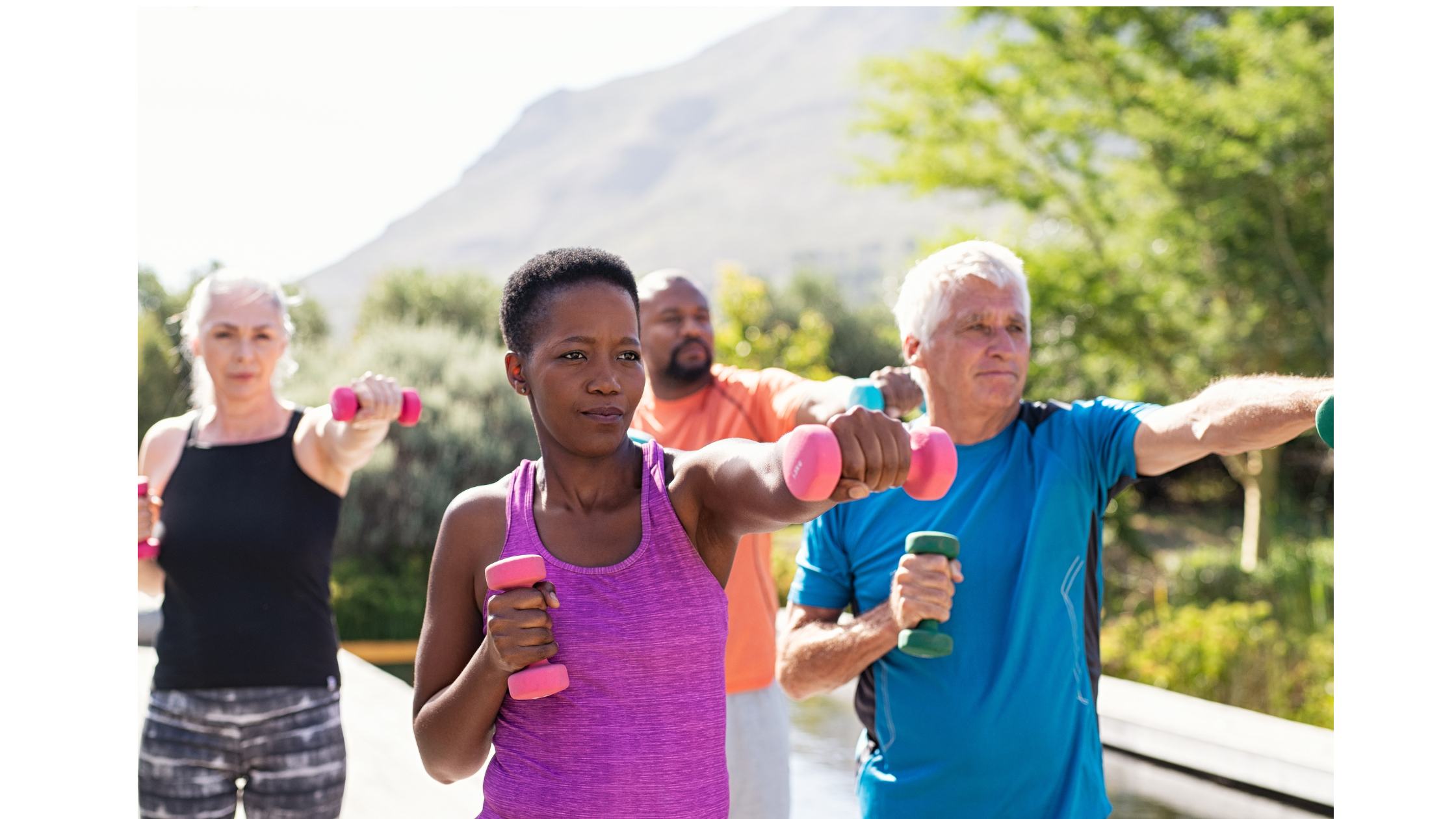
Movement and Exercise
We know physical activity is essential, yet inactivity is 30% higher among those managing at least one chronic disease—exactly the people who need movement most.
The solution? Community fitness.
What the research shows:
Participants who perceived strong support performed 56% more exercise sessions during a 6-month period.
83.3% of participants reported increased confidence in implementing physical activity strategies after partner-based interventions.
Strong social connections contribute to faster recovery after falls and reduce blood pressure.
That confidence gap is huge. Many of us hesitate to start or continue exercising because we’re not sure we can do it. Having a partner or group changes that internal narrative. People in their 70s, 80s, and even 90s have successfully begun strength training and other physical activity when they had the right support system in place.
Nutrition and Healthy Eating
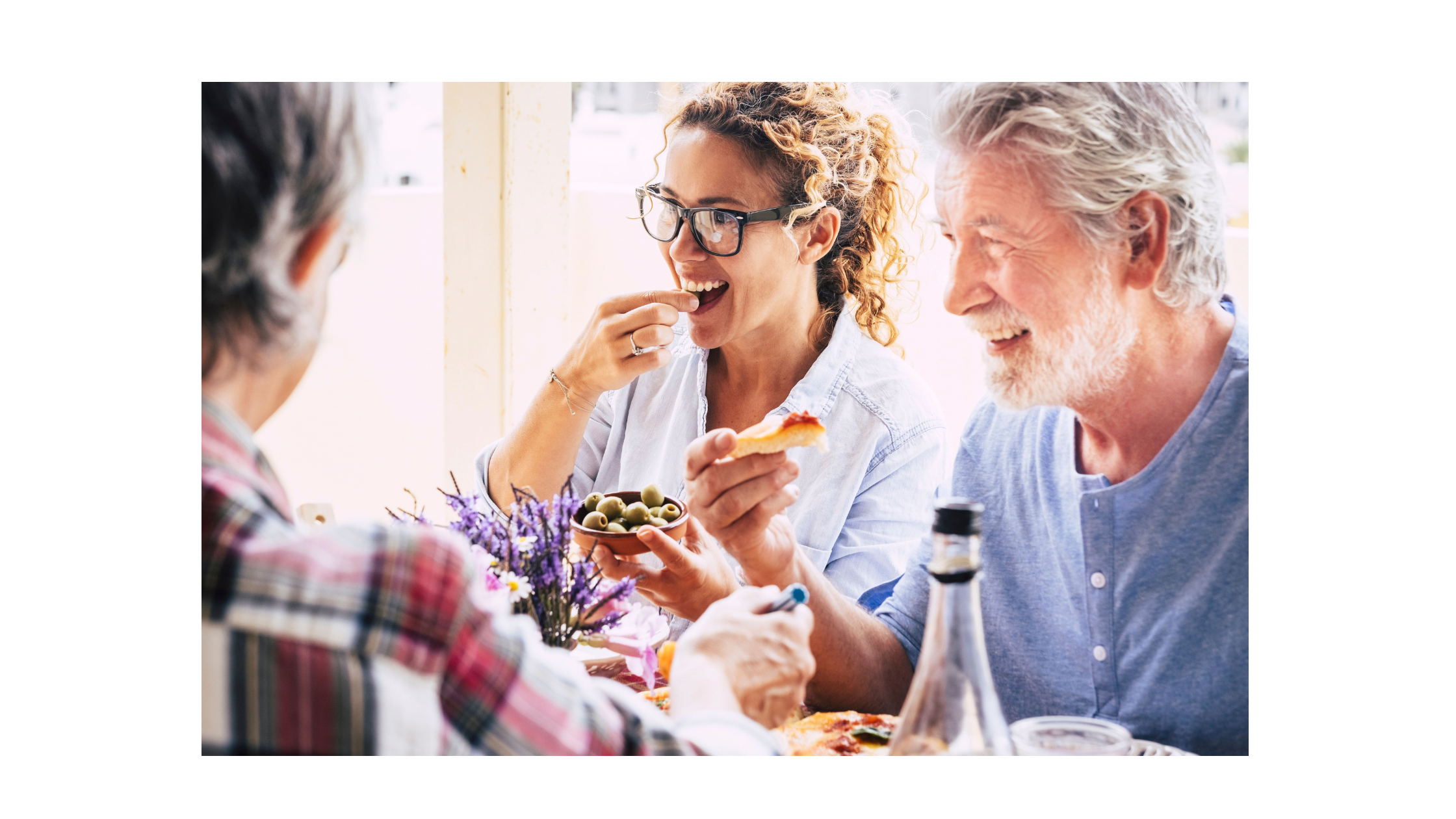
For older adults living alone, social isolation is strongly associated with poor dietary intake. It’s hard to cook healthy, well-balanced meals for yourself when a bowl of cereal feels easier.
But community makes a difference here too.
What the research shows:
Group-based interventions led to improved intake of fruits, vegetables, and water.
12% of the improvement in fruit/vegetable intake was directly traced to improved social support.
The key was receiving specific help to plan dietary goals, keep dietary goals, and reduce barriers to healthy eating.
Social engagement also contributes to healthier eating and sleeping habits overall.
The take away: Generic friendship helps with loneliness, but focused support—like a healthy recipe club, group shopping trips, or shared meal prep sessions—helps us actually change what we eat.
Our Home Environment
Remember my decluttering pact with my sister? There’s science behind its success.
High levels of clutter—an overabundance of possessions creating chaotic and disorderly living spaces—negatively impact psychological well-being and the subjective sense of “psychological home.” Beyond the emotional toll, clutter increases stress and raises the risk of falls.
Decluttering involves complex decisions and emotional attachments to possessions. It’s cognitively and emotionally exhausting. A gentle, non-judgmental partner externalizes this difficult process, helping you overcome decision-making paralysis.
Mental and Cognitive Health
Daily structure and social connections are foundational for emotional and mental health stability in later life. When career or primary caregiving roles diminish, the stabilizing force of routine often disappears, leading to increased anxiety and mood fluctuations. This can compound the knowing-doing gap.
What the research shows:
Structured social groups help reduce anxiety and manage mental health conditions such as depression.
Regular, shared cognitive activities strengthen protective factors against memory decline and depression.
Strong social ties are associated with reduced risk of dementia.
Web-based interventions with peer support show significant increases in overall social support and reduced symptoms of depression and anxiety.
Structured social groups—book clubs, hobby groups, digital literacy classes—provide that predictable framework. This structure helps manage mental health while keeping the brain active and fostering new social ties. This improvement in outlook and mental health leads to more doing.
The Power of “Being True to My Word”
I’m not crazy about using the word “accountability” to describe having a partner that spurs me to get things done. It brings to mind judgment; like someone’s keeping score of my failures.
For me, it’s about being true to my word. Being there for someone because I said I would be.
Let me give you a personal example. My mom used to call me a pack rat, and apparently, it’s genetic because my sister suffers from “pack rat-itis” too. We both had homes full of stuff—things we meant to sort through and donate or get rid of. We knew we should declutter. We genuinely wanted to. But somehow it never happened.
Then we made a pact: one hour each week, minimum, getting rid of stuff. Every weekend, we’d check in with each other.
And you know what? I did it. Not because I suddenly developed superhuman willpower, but because I didn’t want to tell my sister I’d failed to spend one measly hour on our shared goal. One hour—how hard is that?
It worked beautifully. Until we stopped checking in. Then I lapsed right back into my old ways.
That’s the power of partnership. When I was only accountable to myself, it was easy to make excuses. But when my sister was expecting my update? I showed up for her, which meant I showed up for myself.
How To Find Your Accountability Partner or Community
If you’re feeling isolated or unsure where to find your accountability partner or supportive community, you’re not alone. Here’s where to start:
Tap into existing structures:
Area Agencies on Aging (AAAs) and senior centers offer congregate meals and wellness activities, serving as essential hubs for connection.
Health-related support groups—whether focused on chronic diseases like diabetes or cancer, or life changes like grief or caregiving—bridge the gap between medical treatment and emotional needs.
Look for Silver Sneakers, community center classes, or mall walking groups.
Choose the right partner: When seeking a one-on-one partner, look for someone reliable, trustworthy, and invested in mutual success. The partner should have a goal they’re working toward. This mutual commitment ensures you are equals and partners, all contributing their unique wisdom to others’ success.
Address practical barriers: Social engagement can be hindered by transportation access and health needs. Don’t be shy about asking what accommodations are available. Many programs offer accessible transportation options and explicitly accommodate varying health levels.
Exploring the Virtual Option

What if transportation is truly challenging? Or your accountability partner lives across the country?
Enter the virtual community.
While some research shows technology alone doesn’t effectively reduce social isolation, web-based interventions combined with peer support have shown significant increases in overall social support, improved confidence in initiating contact, and reduced symptoms of depression and anxiety in older adults.
The technology is just the venue: the human connection is still the magic ingredient.
Virtual Walking Groups are a highly feasible model for mutual support, extending accountability to activities outside the formal meeting time. You meet virtually to check in, share your walking plans for the week, and report back. The group provides the structure; you provide the steps.
Virtual communities with small groups that allow meaningful interaction are the best choice. Also look for groups using structured activities (guest speakers, focused topics, shared hobbies) with facilitators that actively involve everyone.
Common Questions and Concerns

“What if my partner and I have different fitness levels?”
This is one of the most common concerns, and the good news is you don’t need to match intensity. All you need to share is time and commitment. The solution is to structure activities for mutual presence with modifications, rather than requiring matched intensity.
Find a class with good instructors who offer modifications. Do chair yoga while your partner does traditional poses. Walk at different paces but start and end together. Use equipment that’s easily adjustable in small increments. The value comes from the shared commitment, not matching movements.
Starting slowly with low-risk options focused on mobility, balance, and flexibility ensures safety and builds confidence for the beginner, while maintaining the mutual support that drives adherence.
“But I’m not good with technology!”
If you’re interested in virtual communities but technology feels daunting, here’s what to look for and ask for:
Ask if they offer a practice session. The best virtual programs hold a “Session Zero”—a low-pressure session dedicated solely to teaching you how to use the video platform and troubleshoot common issues. If the group doesn’t offer this, ask if they can schedule 15 minutes before the first real meeting to help you get comfortable.
Look for peer support. Ask if there are other participants who can help with technical questions. Often someone who’s been in the group a while is happy to be your tech buddy.
Get free help. Resources like Cyber-Seniors (supported by OATS/AARP) provide free technology support and training specifically for older adults. They can walk you through the basics before you join any virtual group, so you’ll feel more confident going in.
“I don’t know anyone to ask to be my partner.”
You don’t need to start with someone you already know. In fact, many of the most successful partnerships begin with strangers who meet through the very programs and groups listed above. The Silver Sneakers class I taught? Most people came alone and found their community there.
Start by showing up to a group activity that interests you. The partnerships will form naturally when you’re in spaces designed for mutual support. You might find your walking partner is the person who always arrives at the same time you do. Your decluttering buddy might be someone from your support group who mentions struggling with the same issue.
The Shift: From Burden to Belonging
Here’s what I learned from my Silver Sneakers class, from my decluttering pact with my sister, from every early morning when I showed up for a walking partner:
When we commit to showing up for someone else, we’re no longer relying solely on willpower that depletes by Tuesday afternoon. We’re tapping into something more powerful: commitment and the deeply human desire to be a part of something bigger than our individual effort.
In my Silver Sneakers class, people didn’t come just for the exercises. They came because Carol would ask about their granddaughter’s wedding. Because Joe told terrible jokes. Because when they walked through that door, someone would smile and say their name.
They came because they mattered.
The real secret weapon against the knowing-doing gap is belonging.
When you find your person or people—whether it’s a walking partner, a healthy-cooking buddy, a decluttering accountability partner, or a whole community of fellow active agers—you’re more likely to follow through on your wellness goals and add life to your years!
So here’s my challenge: Don’t try to go it alone anymore. Find your tribe. Make your pact. Show up for someone else.
Because when you do, you’ll discover you’ve been showing up for yourself all along.
🎯 UPCOMING WORKSHOP: Design and Align Your Goals for the Holidays and Beyond
Ready to put these principles into action? Join me for a 90-minute goal-setting workshop using the POWER process—a proven framework I’ve used successfully with my clients and myself. We’ll work together to create goals that stick and immediately apply the external commitment principles we’ve discussed by structuring built-in accountability and shared execution.
Tentative Date: December 3rd
FREE for paid subscribers | Special Black Friday pricing for all others.
Stay tuned for more information and registration details!
Let’s Have a Conversation
What’s your experience with accountability partners or supportive communities? Have you found your tribe? Share your story in the comments below—your experience might be exactly what another reader needs to hear.
The "Gap" is real! It helps to point out the factors that make it simple not easy to change lifestyle habits. I like your concept of closing the gap!
What a wonderful post. So many talk about moving more but so few talk about moving with others!
Until I had two hip replacements, I've always had running buddies. Now I am in group fitness classes almost every day. I love being in community while reaching for my fitness goals.